Told you need a vault? How to check whether the cemetery actually requires one
Outer burial containers are almost always a cemetery rule rather than a state law, and the rule is written down somewhere you can read for yourself.
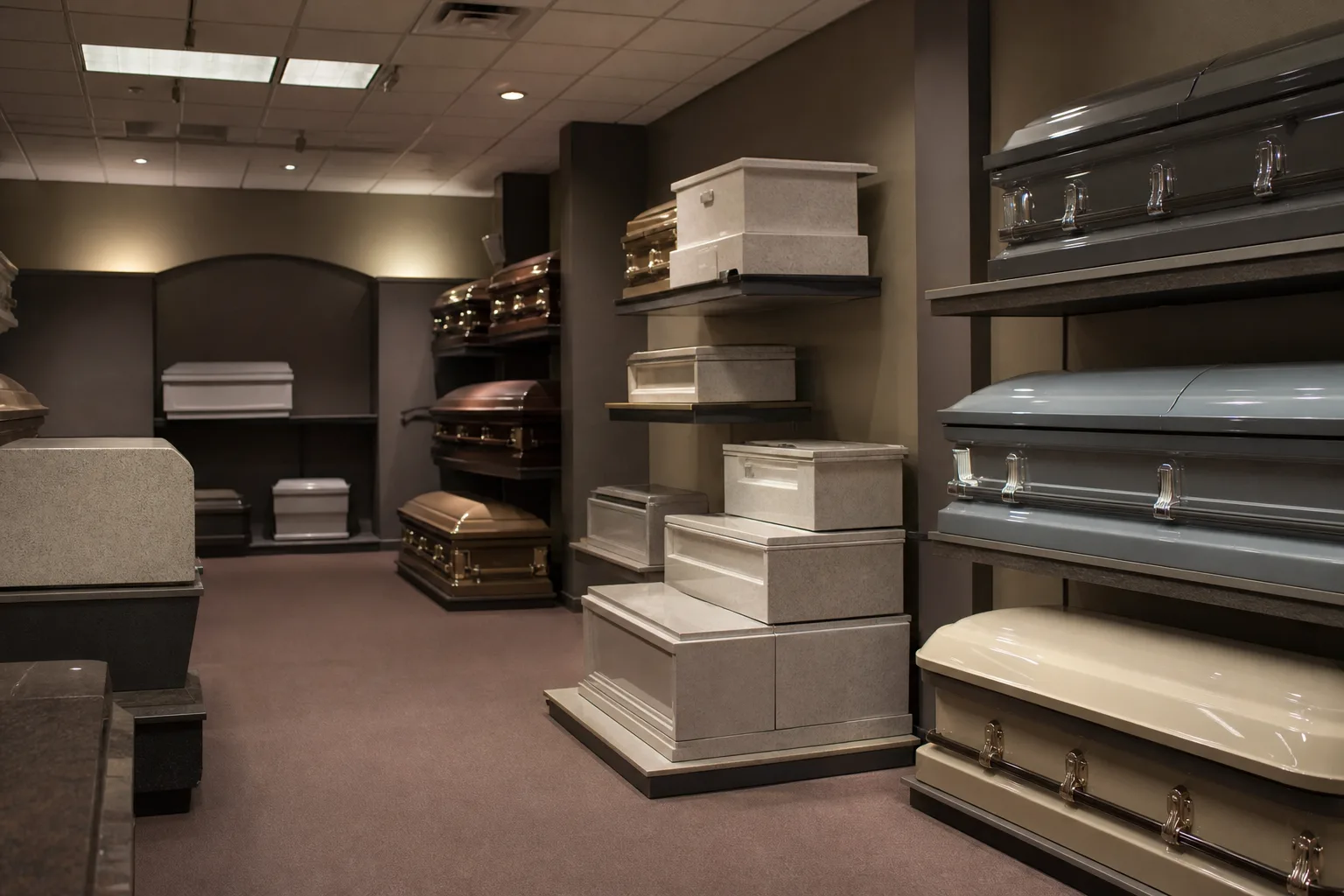
No statewide vault mandate
No state requires an outer burial container as a matter of general law. Where the requirement exists, it was written by the cemetery that owns the ground.
The sentence arrives early in the arrangement conference, usually in the passive voice: a vault is required. What follows is a price list running from a few hundred dollars for a plain concrete box to several thousand for something lined with copper or stainless steel, and the difference between those two numbers is larger than most of the rest of the funeral. The requirement is real often enough. The question a careful reader asks is who imposed it, in what document, and whether the document says vault or says something considerably less expensive.
State law almost never asks for one
No state in the country requires an outer burial container as a general matter of law. The requirement, where it exists, comes from the cemetery, and it exists for a mechanical reason rather than a sanitary or ceremonial one. A grave with nothing but a casket in it collapses as the casket fails, which leaves a depression that has to be filled, reseeded, and filled again. Cemeteries that run mowers over their sections have a direct financial interest in ground that stays level. The rule protects the lawn, and the lawn is the cemetery's largest maintenance expense.
The Federal Trade Commission is responsible for the rule governing how funeral goods and services are priced and disclosed, and the disclosure it requires on this point is specific: a funeral provider has to tell you in writing that state law does not require an outer container in most cases, and has to give you prices for the containers it sells before it shows you the containers themselves. That written statement is your first checkpoint. If it is missing from the paperwork, ask for it, and read what it says before you agree to anything.
A liner and a sealed vault are not the same product
A grave liner is a concrete box, usually with a flat lid set on top, sometimes with the bottom left open. It does what the cemetery needs done. It holds the weight of the soil and the equipment above it so the grave does not sink. A sealed vault is a heavier structure with a gasket, a tongue-and-groove or inverted-lip closure, and frequently an inner lining of plastic, copper, bronze, or stainless steel bonded to the concrete shell. It is sold on the promise of keeping water and soil out, and it is warranted on that basis by the manufacturer, not by the cemetery and not by physics.
The distinction matters because cemeteries that require a container generally require the liner and permit the vault. Their rule speaks to structural support. It rarely speaks to sealing, since a sealed unit does nothing additional for the grounds. Reading the two products side by side, the useful comparison is not which one protects better but which one satisfies the rule you are actually subject to, and what the second one costs above the first.
Get the rule from the cemetery, in the cemetery's own words
Every cemetery of any size has a document called rules and regulations, and the outer container requirement lives in it, usually within a paragraph or two of the sections on monument foundations and interment fees. Call the cemetery office directly and ask them to email or mail you the relevant page. Ask three questions while you have them: whether a container is required, whether an unlined concrete liner satisfies the requirement, and whether the cemetery sells one itself and at what price. Cemetery-supplied liners are frequently cheaper than the same class of product bought through a funeral home, and the answer takes one phone call to establish.
Where the cemetery sells containers, ask whether it charges a handling fee for one purchased elsewhere. Some do, some do not, and the number belongs in your comparison before you decide where to buy.
What the setup charge at the graveside covers
The container price and the installation are separate lines, and they are billed by separate parties more often than people expect. The vault company typically delivers the unit, sets it in the open grave, positions the lowering device over it, and returns after the family leaves to seal or set the lid and confirm the placement. The cemetery charges its own opening and closing fee for excavation, the backhoe, the spoil pile and its covering, the tent and chairs, and the backfill and reseeding afterward. Ask each party for its own figure. Two clear numbers are easier to check than one bundled total.
A container requirement that comes from the cemetery's written rules is a requirement you can plan around, price against, and satisfy at the low end if you choose to. Read the page, ask the three questions, and buy against the rule rather than against the display room.